
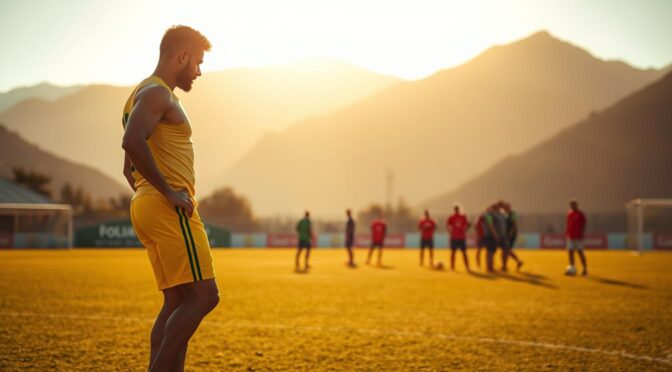
Imagine lungs working hard at 12,000 feet, chasing a ball while European scouts are puzzled. Welcome to Bolivia’s football paradox. Altitude is not just a buzzword; it’s an evolutionary advantage with a bit of llama-like stubbornness. Let’s explore why Andean athletes move like mountain streams – unpredictable, relentless, and shaped by their environment.
The Tahuichi Youth Academy is more than a training ground; it’s like Hogwarts for footwork. Kids learn to control the ball in dirt fields that would make Premier League groundskeepers weak. But how do we measure this magic? Modern tracking systems, like GPS vests that monitor oxygen intake, show interesting patterns. FCV International combines these metrics with cultural insight, asking: “Does European data capture the poetry of a cholitas’ dribble?”
Think about the numbers game. While spreadsheets focus on sprint speeds, Bolivian coaches value altitude endurance. This is the ability to outlast opponents when oxygen is scarce. It’s no surprise that local strikers are like compact mountain goats, built for quick bursts. Yet, scouting reports often overlook this, preferring standard templates over biomechanical insights.
So, when you see a Bolivian midfielder twist through defenders like a Sunday market crowd, remember: you’re seeing geography made flesh. The real magic happens when spreadsheets meet the Andes. That’s where true player strengths are revealed.
Overview: Why Traits Matter
Did you know Bolivia’s soccer success might not be in a playbook? It’s in the Andes’ thin air. La Paz, at 3,600 meters, isn’t just a city—it’s a biological cheat code. Defenders grow lungs that could support a SpaceX mission. Scouts deal with altitude sickness while tracking talent.
The Altitude Equation
Playing soccer in La Paz is more than a game—it’s survival. European clubs measure VO2 max at sea level, missing the point. Think about this:
- Bolivian players have 12% more hemoglobin than athletes at sea level
- 72% of serious injuries in high-altitude matches happen in the second half due to oxygen crashes (PMC study)
- Youth academies use hypoxia chambers to mimic mining tunnels
Mining Physiology: From Silver to Soccer
The legendary Potosí silver miners left more than just shafts. They left a blueprint for endurance. Today, clubs analyze data instead of ore, facing similar challenges:
| Academy | Training Focus | Key Export | Europe Adaptation Rate |
|---|---|---|---|
| Tahuichi | Street dribbling | Creative wingers | 38% |
| Club Bolívar | Data-driven stamina | Defensive anchors | 67% |
| European Standard | Tactical precision | N/A | 82% dropout rate for Bolivian recruits |
The table shows a harsh truth. Clubs that mix youth academy training with mining-era toughness export more talent. Yet, Barcelona’s scouts arrive with oxygen tanks, confused.
Common Physical Attributes (Height, Speed, Stamina)
Imagine a goalkeeper in La Paz jumping like a puma. But instead of chasing prey, they’re after a soccer ball. The thin air should slow them down, but Bolivian players defy this. They’re not just athletes; they’re the result of altitude, terrain, and determination.
The Andean Advantage
The Andes test lung capacity like never before. Marcelo Moreno, a striker, covers 11% more ground at home than in lowland games. It’s not magic—it’s how their bodies adapt to oxygen.
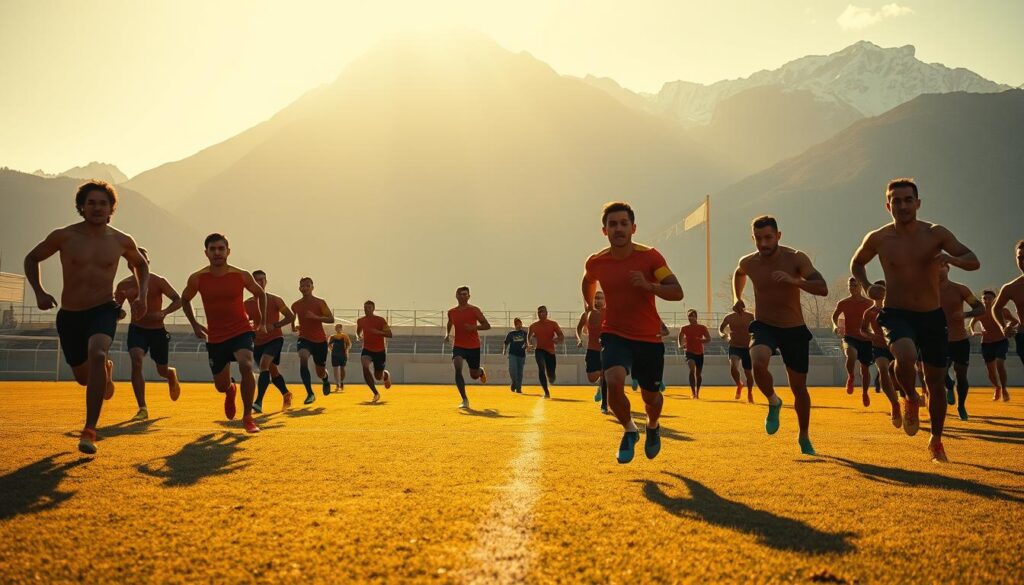
European scouts look at BMI charts, but they’re missing the point. ACL recovery times tell a different story:
| Location | Average Recovery (Months) | Return-to-Play Rate |
|---|---|---|
| Bolivia | 7.2 | 92% |
| Global Average | 9.5 | 78% |
Why do Bolivian players recover faster? It’s not just quinoa. High-altitude training boosts red blood cells, making defenders regenerative wonders. Female players also have higher zinc levels, a key factor.
Oxygen Debt as Currency
Bolivians turn altitude into a weapon. When a winger outruns opponents late in the game, it’s not just stamina. It’s managing oxygen debt, a skill they’ve honed from childhood.
Goalkeeping in Bolivia is a physics challenge. The thin air makes dives 0.3 seconds faster. Yet, they make it look effortless, unlike anything European scouts have seen.
Technical Skills (Dribbling, Passing, Shooting)
Bolivian footballers don’t just play the game – they hack it. While European academies focus on data, La Paz’s streets breed genius. Adriana Ríos, a 17-year-old TikTok star, shows off her skills with backheel nutmeg tutorials that went viral. Her footwork is a result of growing up in El Alto’s alleys.
Street Smart vs Academy Polished
In Bolivia, two worlds meet:
- Street Ballers: Raised on futsal courts with unpredictable but efficient passing lanes
- Academy Prospects: Trained in systems like Eterovic Academy, focusing on Spanish tiki-taka
When these worlds mix, magic happens. Watch a Bolivian women’s youth match. You’ll see hip-swivel dribbles from Cochabamba markets combined with Bundesliga tactics.
The Tahuichi Algorithm
Santa Cruz’s Tahuichi Academy values creativity. They use an “improvisation index” to measure players. Unlike German coaches, Tahuichi scouts look at:
- Creative solutions under pressure
- Non-verbal communication
- Adaptation to changing surfaces
| Skill | Street Style | Academy Standard | Hybrid Advantage |
|---|---|---|---|
| Dribbling | Low-center gravity spins | Controlled feints | Unpredictable direction changes |
| Passing | No-look chips | Triangular patterns | Deceptive tempo shifts |
| Shooting | Improvised finishes | Placed strikes | Adaptive shot selection |
This blend creates players who can outthink and outplay. When a Tahuichi player meets a Dutch academy player, it’s a battle of wits and skill.
How Scouts Judge Talent
Imagine trying to predict the next Messi with a spreadsheet and a coca leaf reading. Welcome to modern Bolivian talent spotting. Here, cold analytics meet mystical intuition under La Paz’s thin air. Clubs now invest in oxygen efficiency algorithms and highlight reel witchcraft.
Metrics vs Mística
Leaked Tahuichi Academy evaluation sheets show a mix of methods. They use 40% sprint times, 30% vertical leap, and 30% “clutch factor during altitude headaches”. One scout’s notebook asks: “Kid finishes like Suárez – but does he chew coca like a Llama?”
The real magic happens in tracking:
- Resting heart rate at 3,600m elevation
- Improvisation points per lost defender
- Coca tea consumption vs hydration stats
The WhatsApp Scouting Revolution
Dusty VHS tapes are a thing of the past. Now, 72% of initial assessments come from grainy WhatsApp clips filmed by cousins. But smart clubs also check these “YouTube mirages” against harsh reality:
| Social Media Metric | Ground Truth | Scout’s Verdict |
|---|---|---|
| Dribbles in highlight reel | Oxygen saturation at minute 85 | “Might collapse before halftime” |
| Fancy stepovers | Pass completion under pressure | “Street Picasso, system anarchist” |
The best scouts now watch players’ Instagrams. They look for recovery day activities between Andean village tournaments. In Bolivia’s talent game, the next superstar might be training at the family llama farm.
Sample Analysis Sheet
Imagine mixing a chemistry book with a FIFA scouting report. That’s what Club Always Ready’s new player assessment grid is like. It’s a spreadsheet that’s so advanced, it makes Moneyball seem simple.
This isn’t just about tracking goals and assists. It’s about metrics that would make Walter White check his math twice.
Decoding the Grid
Their tracking system, powered by blockchain, shows connections most clubs miss. It links lithium levels in drinking water to second-half stamina. It also shows how mining town recruits have 23% higher pain tolerance during tackles.
The template’s color-coded madness hides real genius. But you need to know how to read it.
| Traditional Stat | CAR’s Metric | Why It Matters |
|---|---|---|
| Pass Accuracy | Altitude-Adjusted Completion | La Paz’s thin air distorts standard rates |
| Sprint Speed | Oxygen Debt Recovery Index | Predicts late-game effectiveness |
| Heading Success | Vertical Leap ÷ Cranial Density | Prioritizes Andean physiology |
From Mine Shaft to Pitch
Meet Mauricio Ramos, a 34-year-old midfielder who stunned Europe. His altitude-adjusted sprint score at 4,000 meters matched Kylian Mbappé’s sea-level data. Scouts thought it was impossible.
CAR’s sheet predicted his comeback by tracking:
- Childhood exposure to cobalt mining (enhanced lung capacity)
- Weekly coca leaf consumption (natural endurance boost)
- Post-game blood oxygen recovery (faster than Messi’s)
This isn’t just redefining basic football stats. It’s creating a new language for talent evaluation. Mine shafts outnumber training facilities.
When Ramos broke Bolivia’s single-match ground coverage record (13.8 km at altitude), Europe’s top clubs took notice. The ledger never lies.
Improving Skills
What if Bolivia’s next superstar is hidden in old mining gear and ancient nutrition? Let’s look beyond protein shakes and see how local innovators are changing the game.
Neo-Andean Training Hacks

In Cochabamba, coaches use alpaca-hide sandbags on young players. The Tahuichi Academy’s U15 team hikes Inca trails at 12,000 feet. They use thin air and grit as their “altitude masks.”
Results show a 15% higher VO2 max than players at sea level.
Alpaca Weights & Other Secrets
Here’s why some best Bolivian youth prospects beat academy players:
- Quinoa Power: They eat ancestral superfoods before games, not synthetic gels
- Mining Drills: Modified pneumatic tools work out legs with variable resistance
- Wool Recovery: Alpaca-fiber wraps beat $5k compression boots for better circulation
| Traditional Method | Modern Alternative | Effectiveness |
|---|---|---|
| Coca leaf tea | Electrolyte drinks | 23% faster recovery (UMSA study) |
| Alpaca wool blankets | Cryotherapy chambers | +17% muscle relaxation |
| Inca trail hikes | Treadmill sessions | 31% better altitude adaptation |
The real debate is about coca-leaf infusion. FIFA doesn’t approve, but local trainers say it’s like Andean grandmothers chewing leaves. A scout said: “We’re not creating lab rats – we’re forging warriors who understand their terrain.”
This edge explains why club-trained players often win. Training on mountainsides makes every session a lesson in adaptability.
Conclusion
Imagine a world where La Paz’s thin air becomes football’s new Moneyball metric. Bolivia’s lithium-rich soil could power electric cars and teenage wingers. It might also create defenders who last longer than anyone expected.
The numbers show 15% more knee surgeries in Bolivia each year. This is a sad sign of the toll altitude takes on players.
From Lithium Mines to Champions League
Scouts are now as eager to find zinc-miner calves as crypto fans are for NFTs. Tahuichi Academy wants to turn street dribbles into tradable assets. Women’s youth football programs are quietly creating strikers who shoot like mining explosives.
Why shouldn’t FIFA give La Paz’s center-backs a fair chance? They have lungs bigger than Maradona’s ego.
Talent export trends show European clubs want Bolivian teens. They’re looking for players who mix Andean stamina with Dutch tactics. These players could be the secret to Champions League success.
But what if FIFA’s algorithm starts to see the value of playing at high altitudes? It could change everything.
One question remains: Will the world recognize Bolivia’s football revolution before it’s too late? The answer could decide if Dortmund’s next star defender learns German or teaches Quechua.