

Patriots Player Development gained a new physical base on August 12, 2026, when the New England Patriots held a ribbon-cutting ceremony and officially opened the New Balance Athletics Center adjacent to Gillette Stadium. The project matters because it moved football operations out of a more limited footprint inside Gillette Stadium and into a 160,000-square-foot building devoted to the team’s football work. The Patriots described the facility as more than double their previous football operations space and as the only NFL facility dedicated solely to football with that amount of space, according to the team’s official announcement.
The opening was not a roster transaction, but it still belongs in the personnel conversation. Player acquisition and player growth are linked by environment: where rookies meet coaches, where offseason roster players train, where scouts and coaches exchange information, and where recovery resources sit in relation to practice fields. None of that guarantees wins, improved draft returns, or cleaner injury outcomes. It does, however, give New England a clearer structure for the daily work that shapes player readiness.
What The Facility Means For Patriots Player Development
Patriots Player Development Starts With Daily Access
The clearest football value is access. The research describes a design philosophy called "the player journey," with the building arranged around how players move through a workday: arrival, nutrition, locker room, weight room, equipment, meetings, and practice. For Patriots Player Development, that matters because wasted movement can cut into teaching time, recovery windows, and position-specific preparation. The effect should be assessed cautiously, but the intention is clear: make football work easier to repeat.
The facility was not simply opened after construction and then put into distant use. Construction began around December 2024 or January 2025, roughly 20 months before the ribbon-cutting, and the team was able to move in ahead of the 2026 NFL Draft. That timing gave football staff a chance to use the building during a key roster-building period. It also placed incoming players into a new operations setting before the August 12, 2026 public opening ceremony had taken place.
The locker room is another practical detail. It includes 92 permanent lockers, enough for the full offseason roster. That means training camp and offseason work no longer require portable or shared lockers for players outside the regular-season roster size. For established players, that may sound modest. For rookies, tryout players, and depth options trying to learn a playbook while competing for roster space, having a defined place in the building can support order and routine.
Why Space Matters For Coaching And Evaluation
The main team meeting room seats 160 people, about 60 more than the prior meeting room. Positional group meeting rooms and a large virtual reality-enabled turf classroom are also part of the layout. These spaces are not proof of better coaching. They are tools that can allow coaches to teach larger groups, break out by position, and use visual learning in a football setting.
That is relevant to roster evaluation because the Patriots, like every NFL team, must compare players at different stages of development. A draft pick, veteran signing, practice candidate, and offseason depth player may all need different types of instruction. A building cannot make those decisions for coaches or scouts, but it can bring training, meetings, strength work, recovery, and personnel discussion closer together. That is where the facility connects to the broader roster process.
Inside The Football Operations Upgrade
Training, Recovery, And Nutrition Under One Roof
The amenity list shows how the Patriots structured the building around football operations. The New Balance Athletics Center includes a 15,000-square-foot weight room, a 10,500-square-foot virtual reality room, an 11,000-square-foot dining hall and kitchen, and a 3,700-square-foot hydrotherapy space with hot and cold tubs and an underwater treadmill. These are confirmed facility features, not performance claims.
- Strength work: The 15,000-square-foot weight room gives the strength and conditioning staff a larger dedicated training area.
- Teaching tools: The 10,500-square-foot virtual reality room and turf classroom create space for football instruction away from the outdoor field.
- Nutrition: The 11,000-square-foot dining hall and kitchen place meal planning inside the same football operations flow.
- Recovery resources: The 3,700-square-foot hydrotherapy space adds dedicated room for recovery work using confirmed equipment.
The reported cost was $95 million, according to Sports Business Journal. That figure places the project firmly in the sports-business side of roster building. NFL teams spend heavily on scouting, coaching, analytics, and medical support, but physical infrastructure is the setting where those departments meet players. The Patriots’ investment signals that football operations space was treated as part of the club’s competitive infrastructure.
Light, Visibility, And The Work Environment
Natural light was a stated upgrade in the research. Nearly every office space now has windows, and key areas such as the weight room, nutrition center, hydrotherapy pools, and meeting rooms were positioned to get daylight in the morning and afternoon. That is a workplace design choice with football consequences: coaches, scouts, trainers, nutrition staff, and players all spend long hours in these spaces.
The cautious reading is best. Better light does not develop a receiver’s release package, teach a guard hand placement, or improve a quarterback’s processing by itself. Still, football development is built on repeated work, and repeated work happens inside a daily environment. If the building makes the routine easier for staff and players to sustain, it supports the process even if the eventual football results remain measurable only over time.
How The Layout Supports Daily Work
From Scouting To Practice Fields
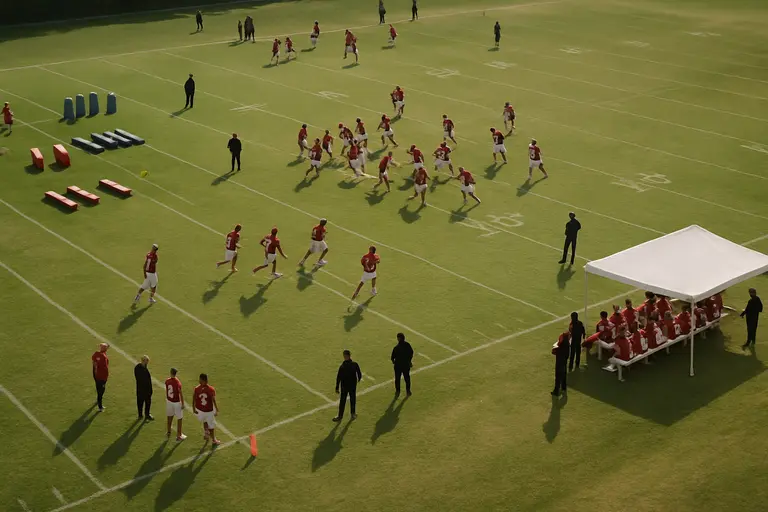
The research says the center brings together training, strength and conditioning, recovery, scouting, and coaching. That combined setup matters because the Patriots’ football decisions depend on information moving across departments. Scouts evaluate traits and fit. Coaches test assignments and technique. Strength staff track physical preparation. Recovery staff manage confirmed treatment and return-to-work plans without public guesswork about injuries.
For Patriots Player Development, that structure could be most useful with players who sit outside the top of the depth chart. The offseason roster creates a wide range of needs: draft picks learning professional routines, veterans adapting to a team’s terminology, and fringe players trying to show they can handle more responsibility. The building’s 92 permanent lockers and larger meeting spaces fit that phase of team-building because they allow the whole offseason group to be housed and taught without temporary arrangements.
The facility also includes a relationship with New Balance tied to product innovation in apparel and footwear. The research supports that connection but does not establish specific performance outcomes. It is fair to say the center gives the team and brand a shared space connected to football operations. It would not be fair to claim that any product advantage has already changed on-field results.
A Facility Investment, Not A Shortcut
Facility projects are easy to overstate. Teams still need accurate scouting, sound coaching, healthy competition, and players who can execute under pressure. New England’s new building does not replace those core football tasks. It gives them a larger and more organized place to happen.
That distinction is important in any evaluation of the Patriots football operation after August 12, 2026. The center may improve workflow, convenience, and departmental contact. It may help rookies and roster hopefuls settle into a more stable daily pattern. Yet the evidence available now supports only the facility facts: size, cost, amenities, layout philosophy, and operational consolidation. The football impact will have to be judged through future roster development, practice reports, coaching assessments, and game performance data that are not part of the confirmed record here.
For readers interested in exploring similar sports facilities, Triplet Powersports offers insights into how equipment, training culture, and performance spaces are represented across various sports settings.
New Balance Athletics Center And Patriots Player Development
What Can Be Reported Now
The most responsible assessment is that the New Balance Athletics Center gives the Patriots a larger, football-specific base for development, evaluation, and daily operations. The confirmed facts are substantial: 160,000 square feet; an August 12, 2026 official opening; a move-in before the 2026 NFL Draft; a reported $95 million cost; 92 permanent lockers; a 160-seat team meeting room; and dedicated spaces for strength, nutrition, virtual reality instruction, hydrotherapy, coaching, and scouting.
Patriots Player Development is now tied to a building designed around the player’s workday. That is meaningful, but it should be measured carefully. The center can reduce friction, centralize football departments, and give players more consistent access to resources. It cannot, by itself, validate draft choices, settle depth-chart competitions, or predict how emerging players will perform on Sundays. The facility is a major investment in the conditions around development; the next evidence will come from how players and staff use it.