
When you think of South American sports dynasties, Bolivia might not be the first team that comes to mind. But against all odds, they’ve managed to build a working athletic pipeline.
Imagine five cities working together to grow talent in both men’s and women’s sports. They have about 400 players in their system. And let’s just say their referee corps could use a few more people.
It’s like trying to put together IKEA furniture without instructions. You admire the effort, but you’re left wondering how it all comes together. The challenges are huge, from being landlocked to having mountains everywhere.
Despite these obstacles, they’ve found a way to make it work. It’s like something held together with chewing gum and hope.
Talent Selection Process
The Bolivian youth national handball selection is like a lottery. It’s all about chance, not careful planning. Imagine finding your Olympic dream by just seeing the right poster.
Ana Belen started in 2014 with a simple ad. Maria was pulled into handball by a friend in 2018. It’s not like La Masia’s academy – it’s more like “Slumdog Millionaire” meets sports.
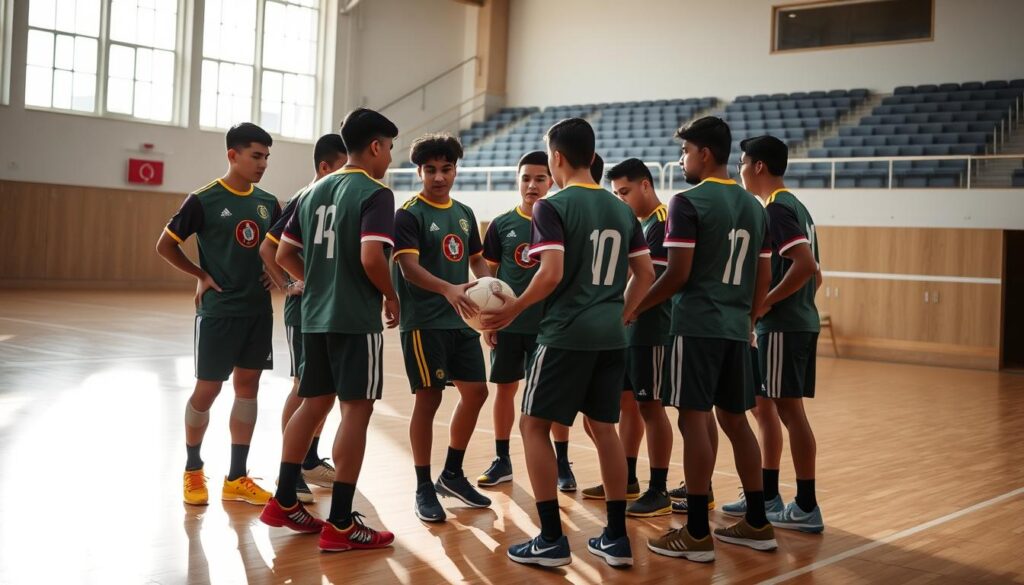
The selection process is exciting. First, you find handball by accident. Then, you survive high-altitude training. Lastly, you show lots of enthusiasm with limited resources.
Bolivia makes up for lack of resources with creativity. They send players to China for training. It’s a big deal, even if explaining Bolivia’s location is part of it.
This system values raw passion over perfect skills. They look for kids who keep going, even when tired. It’s about heart, not just technique.
They focus on basic skills first, even at high altitudes. It’s like learning math with an abacus before a calculator. You understand more deeply through simpler ways.
Unlike Europe, Bolivia trusts in happy accidents. Sometimes, the best talent finds you, not the other way around.
Key Milestones
Bolivia’s handball journey is like a surreal painting. You’re not sure what you’re seeing, but you can’t look away. They went from zero to twelve clubs fast, like a startup boom.
Their first national league launch was like a college road trip. Someone shouted “vamos!” and they started playing handball. It was chaotic, with no rules, but full of enthusiasm.
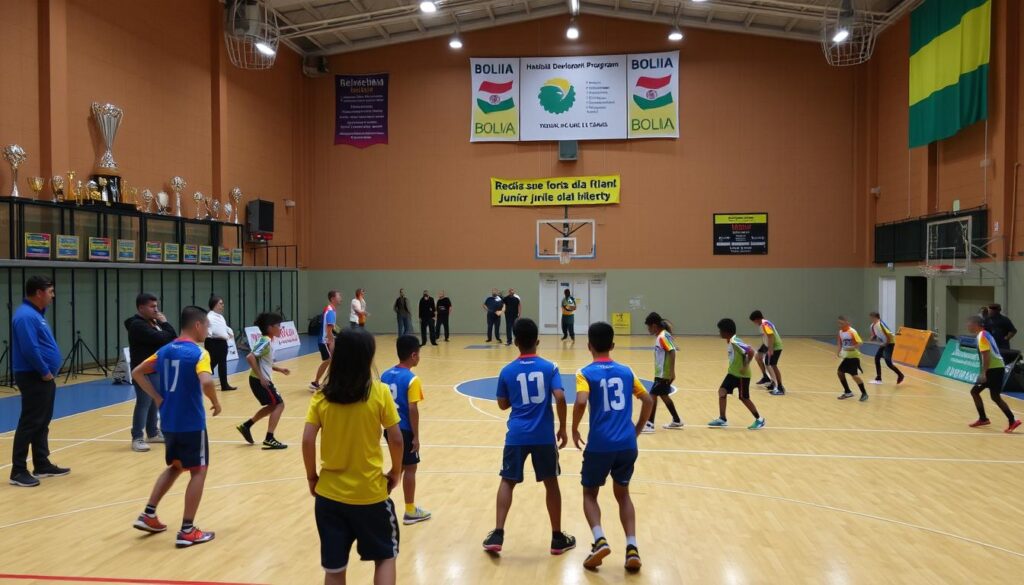
International competitions brought their own unique style. Showing up to the South and Central America Handball Championship with only 10 players was bold. We’re not sure if it was genius or a mistake.
The bolivia u20 program was the real magic. They took kids from the altiplano and taught them handball. It was surprising how well it worked.
Referee and coaching courses came out of this chaos. People who barely knew the rules started teaching others. It was a blind leading the blind, but it worked.
| Year | Milestone | Impact Level |
|---|---|---|
| 2015 | First National League Formation | Domestic Revolution |
| 2017 | International Tournament Debut | Global Awakening |
| 2019 | Coaching Certification Program | Systemic Growth |
| 2022 | 12-Club National Network | Infrastructure Boom |
The bolivia u20 development pipeline was their highlight. Young athletes learned handball had rules, not just “throw hard.” This was during their growth phase, when talent increased.
Curiosity turned into ambition for the bolivia u20 squad. They started thinking about tactics, not just running fast. They learned about passing, defense, and aiming to score.
Bolivia’s handball story is about turning crazy ideas into success. Their milestones are more than dates; they’re chapters in a surprising sports revolution.
Transition Challenges
Imagine trying to build a soccer career at high altitudes. Bolivia’s soccer pathways face a huge challenge. They go from playing at 4,000 meters to sea level, where oxygen is plentiful. It’s like training for a marathon while breathing through a straw.
The budget for Bolivia’s national team is tiny. It’s like a college coach’s budget. They use a 10-player strategy, showing their determination.
Support from authorities is lacking. They only believe in traditional sports, not new ones. It’s like trying to sell vegan options at a Texas barbecue.
The economic situation is tough. Bolivia’s income hasn’t grown in 50 years. This makes it hard to fund soccer development. They’re building soccer pathways with duct tape and prayers.
Structural Barriers in Bolivian Soccer Development
Finding talented players is hard. Bolivia lacks good systems to find them. Moving from youth to senior teams is tough.
Playing against developed countries is tough. Bolivia faces teams with more resources. The experience gap is huge.
| Challenge Category | Specific Issue | Impact Level | Potential Solutions |
|---|---|---|---|
| Financial Constraints | Limited development budgets | High | Strategic international partnerships |
| Infrastructure Gaps | Inadequate training facilities | Medium-High | Phased facility upgrades |
| Administrative Hurdles | Traditional sport preference | Medium | Evidence-based advocacy |
| Competitive Disadvantage | Altitude adaptation issues | High | Specialized training protocols |
| Talent Identification | Small player pool | Medium-High | Enhanced scouting networks |
Bolivia’s soccer pathways show great resilience. The challenges lead to innovation. Coaches and players develop skills that can’t be taught.
The challenges in Bolivia are unique. They test the limits of development programs. Those who succeed gain valuable skills like adaptability and problem-solving.
Despite the odds, Bolivia’s soccer has its successes. These stories are inspiring. It’s like alchemy, turning weaknesses into strengths.
The journey through Bolivia’s soccer pathways is tough. It involves overcoming many obstacles. But those who keep going develop a unique identity in football.
These challenges also open doors for new solutions. The gaps in the system encourage creative approaches. Sometimes, the toughest challenges lead to the most innovative solutions in soccer pathways.
Successes & Setbacks
Bolivia’s football story is like a Shakespearean comedy. It has triumphant highs and faceplant-worthy lows. The journey from zero to four hundred players is a story of against-all-odds success.
Their greatest achievement is building a national league from scratch. It’s like baking a soufflé without knowing what eggs are. They created competitive structures and developed talent pipelines.
The growth of women’s programs is another victory. Bolivia developed women’s programs that attract participation. It’s like watching someone win MasterChef using only a microwave.
International competition brought pride and painful lessons. Bolivia’s approach to tournaments was sometimes like showing up to a gunfight with a sharp spoon. They had a memorable occasion when they arrived with ten players for an international competition.
The setbacks reveal the harsh realities of developing niche sports:
- Heavy losses in international competition that would make other nations question their life choices
- Funding limitations that make bootstrap startups look lavishly financed
- Infrastructure challenges that turn simple practices into logistical nightmares
Their financial situation is worth mentioning. Bolivia’s football funding is very limited. They’ve mastered the art of doing more with less, sometimes almost nothing.
Yet, Bolivian football maintains unkillable optimism. They persist like a houseplant that refuses to die. Their psychological resilience might be their greatest achievement.
The women’s programs show this stubborn hope. While other nations debate equal pay, Bolivia’s athletes are just happy to have cleats that match. Their progress in women’s football is a quiet revolution.
International competition is their crucible. Each tournament brings fresh humiliations and occasional breakthroughs. They’ve learned that showing up with ten players might work for dinner reservations, but less so for professional sports.
Infrastructure challenges remain the constant opponent. Poor facilities, limited equipment, and transportation issues would cripple most programs. Bolivia treats these obstacles as mere suggestions.
The national league is their crowning achievement. It’s not fancy. It’s not wealthy. But it exists, which feels like a minor miracle.
Bolivian football’s story isn’t about dramatic victories or championship trophies. It’s about showing up. It’s about that stubborn human tendency to build things simply because we can. Their journey reminds us that sometimes the most impressive success isn’t winning – it’s refusing to quit when everything says you should.
Notable Alumni
Bolivia’s football alumni list is like your hometown hall of fame. It’s charmingly authentic, with stories that feel handwritten. This is in contrast to the AI-generated content we see today.
Herbert Rosales, the goalkeeper, was just 22 when he was named best player against Uruguay. In Bolivia, this makes him a senior statesman. It shows how athletes age faster in developing football nations.
Then there’s Ana Belen Avendaño Pardo, the first Bolivian woman to play professionally abroad. She signed with a Paraguayan club in 2017. Her journey was like a diplomatic mission, but she opened doors for others.
These alumni stories share a common thread. They found football by accident and kept at it out of stubbornness. They grew up playing on small courts with vintage equipment.
Their achievements are personal, not about World Cup wins. They’re about firsts – playing abroad, scoring an international goal, navigating airports. Bolivia’s alumni stories are refreshingly real in a world of overproduced football tales.