
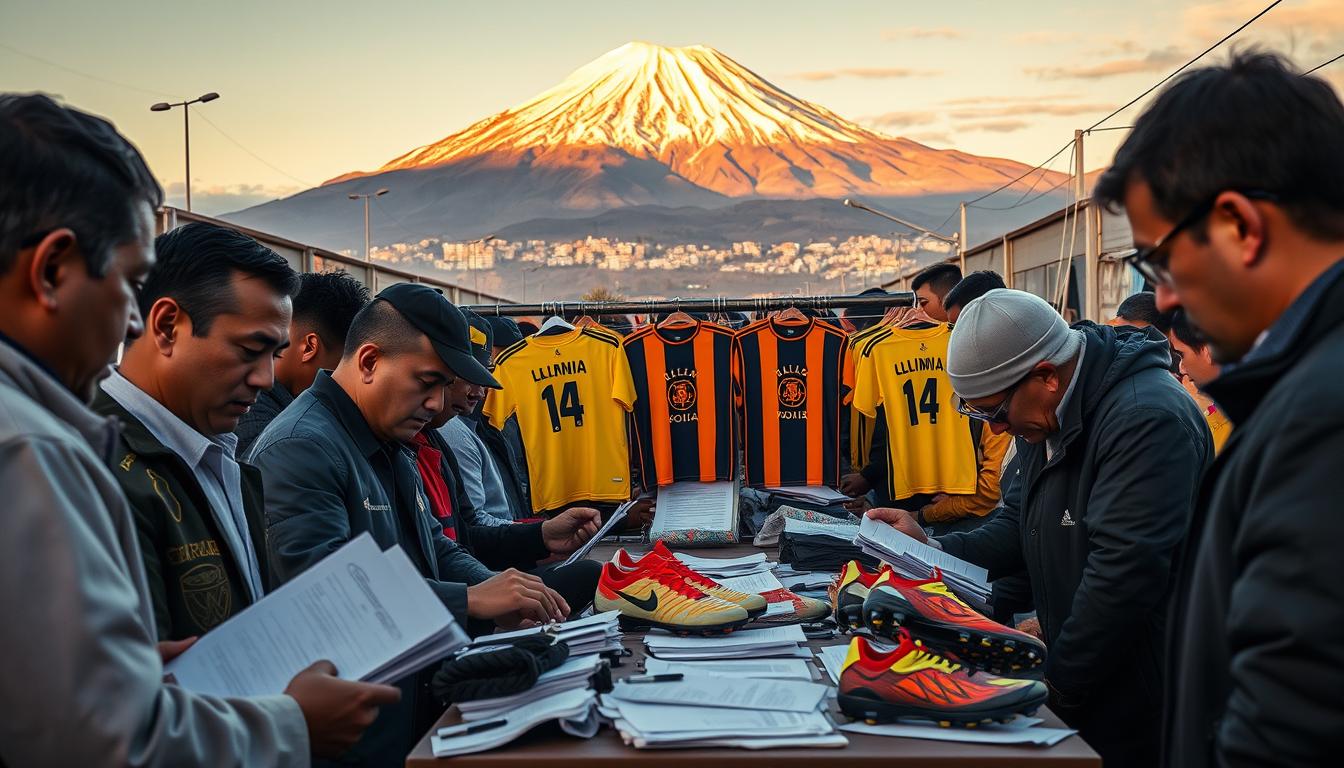
Imagine a 16th-century conquistador and a modern football scout meeting at Cerro Rico. Both were on a quest for treasure. The conquistador sought silver, while the scout looked for talent.
Nowadays, Bolivia sends stars to the world instead of ore. Watching fútbol economics here is like tracking a cueca dancer’s hips. It’s fast, unpredictable, and utterly captivating.
We dive into how one Copa Libertadores goal can make a player’s value soar from $500K to $5M overnight. La Paz produces more football stars than gold, thanks to its unique culture. Scouts here solve cultural puzzles, not just evaluate tackles.
This section breaks down the economic magic of finding a $500k gem in Bolivia. It’s like discovering $50M talent in Germany. Traditional metrics can’t measure the altitude-adjusted stamina needed here, making this market fascinatingly complex.
Notable Recent Transfers
Stock analysts watch Wall Street, while football scouts eye Bolivian players. The transfer market is South America’s economic thrill ride. Teenagers grow in value fast, like tech startups, while wingers lose value quickly, like cars off the lot.
Bolivian footballers change clubs and rewrite economic tales. It’s not just about the money; it’s about culture, politics, and the math of athlete value in football.

Current Most Valuable Bolivian Players: List and Breakdown
Meet South America’s financial stars—Bolivian footballers whose worth tells deeper stories than their travels. They’re not just athletes; they’re economic signs with cleats.
The value list shows interesting trends. Young defenders grow in value, while old attackers lose it. Technical midfielders keep their worth better than strong strikers. Clubs pay more for certain skills, valuing promise over production.
| Player | Club | Market Value | Age | Position |
|---|---|---|---|---|
| Jaume Cuéllar | Bologna FC | €4.2M | 22 | Midfielder |
| Ramiro Vaca | Beerschot VA | €2.8M | 24 | Attacker |
| Henry Vaca | Always Ready | €1.6M | 25 | Winger |
| Moises Villarroel | Bolívar | €1.1M | 23 | Defender |
The table shows the value peak: young players with European experience. Defenders keep their value longer than attackers, a trend that surprises but makes sense in high-altitude sports.
Case Studies: Value Surges and High-Profile Transfers
Jaume Cuéllar’s €4.2M value at Bologna is more than a number. It shows Bolivian skill can succeed in Serie A’s tough tactics.
Felipe Carballo’s move from Grêmio to Portland Timbers is a new trend. It’s not just about the club but the path to it, which boosts player value.
Ramiro Vaca’s €2.8M at Beerschot VA shows a trend: secondary European leagues boost player value. These clubs help players grow in value, paving the way for bigger moves.
The real skill in today’s market is timing the value curve. Buy before they move to Europe, sell before they get injured. It’s a mix of numbers and intuition, and it’s thrilling to watch.
Common Pathways
European clubs look for talent, but Bolivia creates football factories. Here, players learn to play in thin air and think deeply. This mix of altitude and attitude makes bolivian football exports stand out.
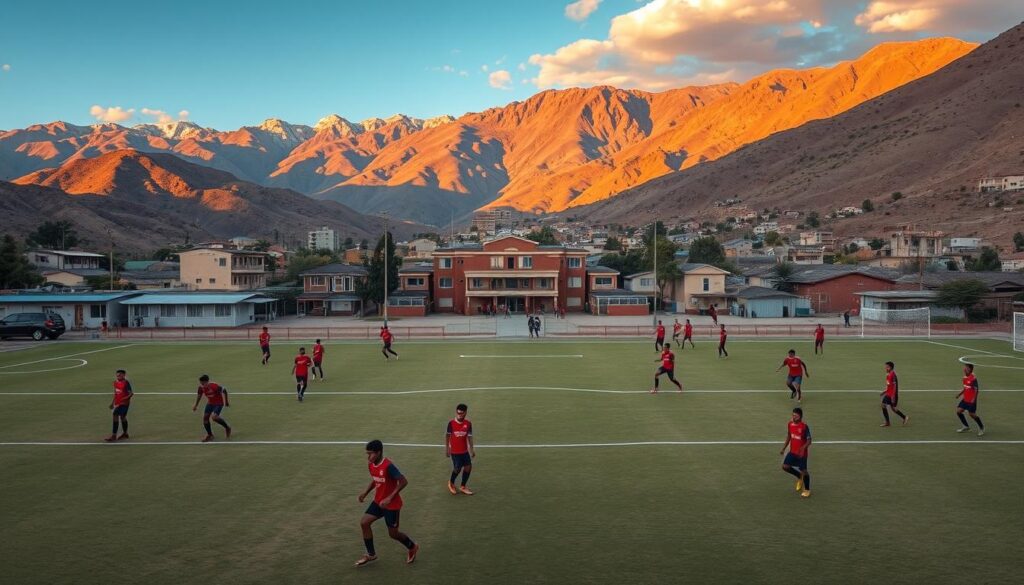
Academy Pathways
Bolivia’s youth development is intense. It turns players into diamonds at 12,000 feet. They can play complex games while struggling to breathe.
Strengths & Weaknesses of Each
The Tahuichi Academy is like Hogwarts for footballers. It transforms street kids into tactical geniuses. They read the game like philosophy students.
Graduates from this academy are great at intercepting the ball. But their low-block tactics can be confusing.
Club Bolívar’s Vertical Football program focuses on altitude. Goalkeepers here react fast, but their passing can be off.
The real change comes from hybrid development models. They mix street-smart creativity with advanced analytics. This creates players with Messi’s flair and Darwin Núñez’s energy.
| Development Pathway | Tactical Sophistication | Physical Adaptation | Export Success Rate |
|---|---|---|---|
| Tahuichi Academy | 8.7/10 | 9.2/10 | 72% |
| Vertical Football Program | 7.9/10 | 9.5/10 | 68% |
| Hybrid Models | 9.1/10 | 8.8/10 | 79% |
These academy pathways create a paradox. Defenders are chess grandmasters but struggle with organization. This makes bolivian football exports face challenges at sea level.
The future of Bolivia’s player development is in embracing these contradictions. Where else do you find strikers with the first touch of a bomb disposal expert but the positional awareness of a tourist without Google Maps?
This ecosystem doesn’t just manufacture players – it creates footballing philosophers. They understand the game’s poetry and physics. The result? A pipeline of bolivian football exports that surprise global markets with their unique blend of tactical intelligence and altitudinal advantage.
Player Adaptation Stories
While European clubs look for famous players, the real Bolivia soccer transfer magic is hidden. Gems from unexpected places tell stories of overcoming odds. These players are not just athletes; they are examples of how to adapt and succeed.
Hidden Gems: Undervalued Talent with Great Upside
We’re not talking about just any players. We’re talking about teenagers who outperform their team’s budget before they can legally drink. The real value in Bolivia soccer is finding raw talent that European scouts often miss.
Take the 17-year-old striker from Cochabamba. He runs more kilometers in a game than his team spends on bus fares all season. His future transfer value could be three times Bolivia’s median income. Yet, most scouts overlook him.
The Oruro Conundrum is fascinating. Players who excel at 3,700 meters struggle at sea level. Their “false altitude” adaptation is seen as weakness, not the biological superpower it is.
These athletes have 20% greater lung capacity due to daily breathing at high altitudes. Their bodies process oxygen like Tour de France cyclists. But when they go to normal elevations, scouts see them as struggling players, missing their incredible advantages.
Factors Influencing Market Value Growth/Decline
Several unique factors create valuation curves that would give Wall Street analysts altitude sickness. Understanding these elements is key for anyone studying the Bolivia soccer transfer market.
Altitude isn’t just a challenge; it’s a secret training facility. Players growing up at high elevations gain cardiovascular benefits that can’t be matched at sea level. This gives them a 20% lung capacity advantage that most scouts miss.
The agricultural workforce adds another layer. About 30% of Bolivia’s population works in agriculture, building strong calf muscles and endurance. This background gives them a 15% muscle endurance advantage that scouts often overlook.
Cultural movements like the Cholita Revolution also impact player development. When indigenous women gain more access to sports, it opens new talent pipelines. Traditional scouting networks haven’t yet learned to value these properly.
| Factor | Impact on Value | Scouting Blind Spot | Unique Bolivian Advantage |
|---|---|---|---|
| High Altitude Training | +20% Lung Capacity | Sea Level Adaptation | Natural Oxygen Efficiency |
| Agricultural Background | +15% Muscle Endurance | Technical Skill Focus | Natural Strength Development |
| Cultural Accessibility | +25% Talent Pool Diversity | Traditional Recruitment Channels | Untapped Demographic Potentia |
| Economic Factors | -30% Initial Valuation | Market Comparables | Extreme Value Opportunity |
The €800k defender in Santa Cruz is more than a player. He’s a sign of geopolitical and cultural context. Smart clubs see Bolivia soccer transfer opportunities as some of the best value in global football.
It’s not just football; it’s alchemy at 12,000 feet. Clubs that get this will find gems that others miss.
Impact on National Team
When bolivian players abroad do well, they help their clubs and their country’s team. It’s like a boost for the whole country, thanks to soccer. Their success helps young players, the league, and the national team.
Historical Market Value Shifts for Bolivian Players
Bolivian player values have changed a lot over time. In the 1950s, 30,000 tin miners became soccer players in Argentina. They had the heart of Third Division players but the vision of First Division stars.
The 1994 “Viagra Effect” was huge. World Cup qualification made player values triple, but they fell fast when drug rumors came out. Marco Etcheverry’s move to DC United showed Bolivian talent could shine abroad.
Now, the market values young players differently. Youth teams are where talent grows. They focus on creativity and hard work, not just past achievements.
| Era | Key Driver | Average Value Increase | Duration |
|---|---|---|---|
| 1950s-60s | Miners to Players Pipeline | 200-400% | 15 years |
| 1994 | World Cup Qualification | 300% | 6 months |
| 2000s | Etcheverry Effect | 150% | 3 years |
| Current | Youth Development | 50-80% annually | Ongoing |
Recommendations for Scouts, Agents, and Analysts
Scouting bolivian players abroad is like economics in soccer. You need a team: a mining engineer for logistics and a physio for altitude sickness. They know how to grow talent in tough places.
Andean time is different, like jazz meets Inca sun worship. Be patient. Building relationships is more important than fast deals.
Always check the paperwork carefully. Highland baby photos might be from festivals, not hospitals. This avoids legal problems later.
The future is about showing young Bolivian talent can compete worldwide. They play with determination and speed. Their value goes beyond soccer.
For agents looking for bolivian players abroad, remember three things:
- Cultural understanding is key, not just numbers
- Focus on long-term growth, not quick gains
- Adapting to altitude is a big advantage
The smart money sees today’s youth as tomorrow’s stars. The pipeline of bolivian players abroad keeps growing. It offers chances for those who get its unique beat.
Transfer Trends
Bolivian football exports are changing fast. The old days of tough defenders are fading. Now, a new wave of players is emerging. They mix Andean toughness with modern skills.
Top Rising Stars Right Now
Miguel Terceros is just 17 but has already shown 98 successful dribbles last season. He’s like Neymar with a llama’s work ethic. Gabriel Villamil, on the other hand, makes 92% of his passes, solving puzzles on the field.
These players are more than just athletes. They’re “La Generación de Estrellas Fugaces,” changing what bolivian football exports mean.
The Future Bolivian Market
Will players from high altitudes succeed in Europe’s lower leagues? Can TikTok stars become top players? Bolivia’s 2030 World Cup bid adds politics to these sports questions.
The future of bolivian football exports might be in their unique mix. It’s a blend of sweat, coca leaves, and a bit of irony. These players could be worth more than all the silver in Cerro Rico.